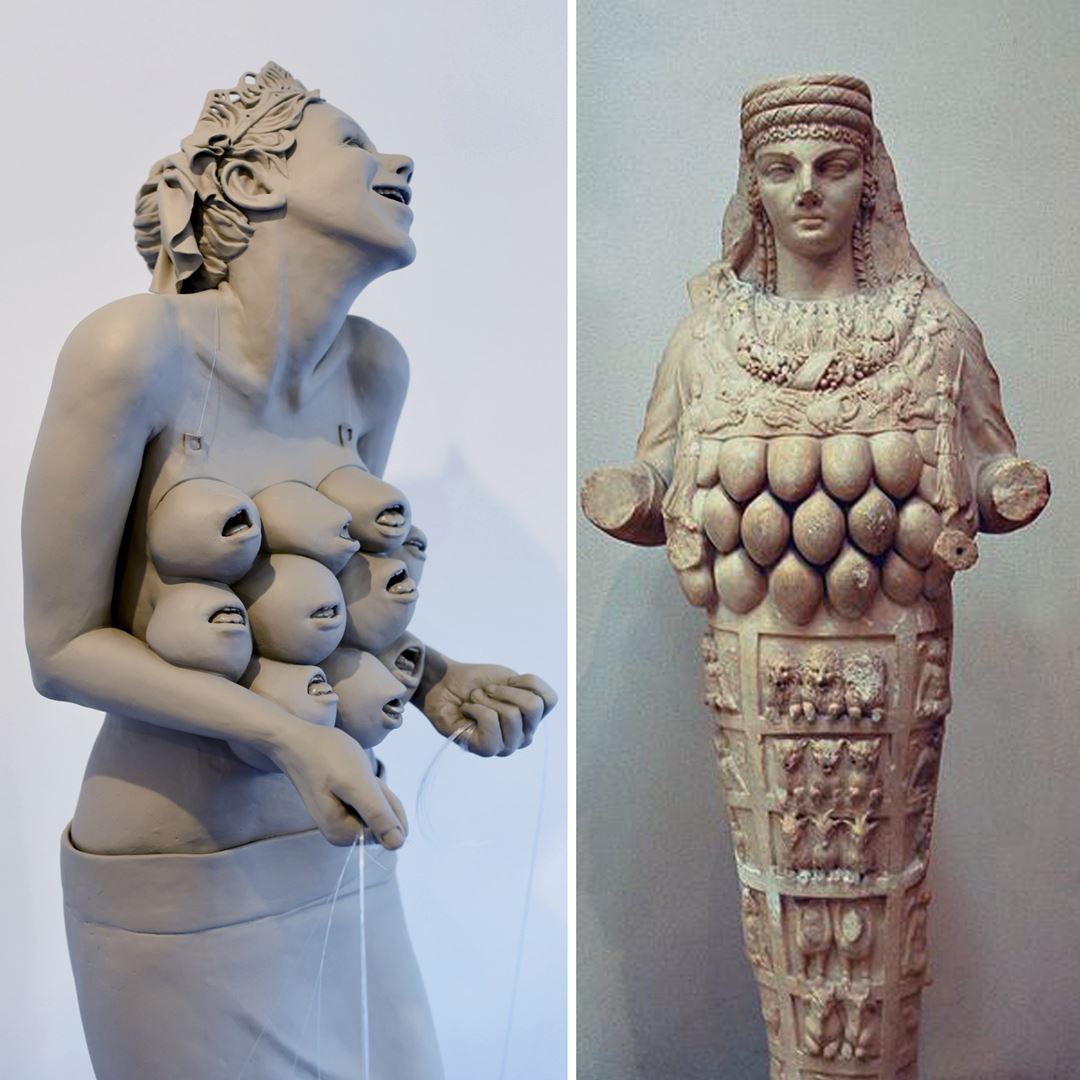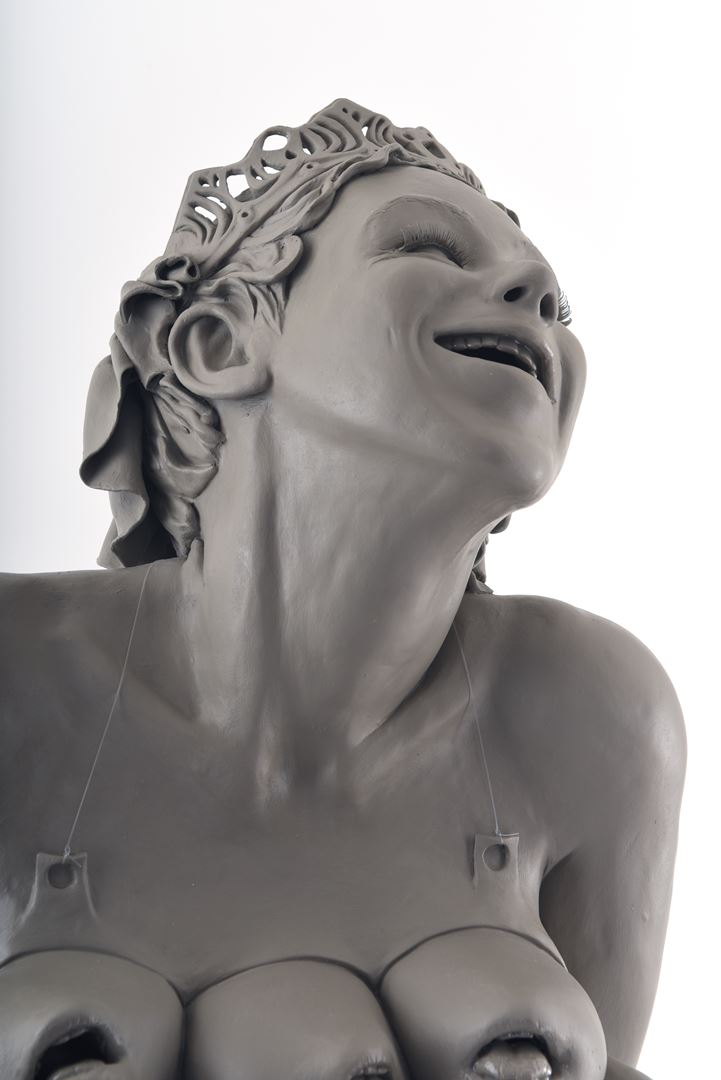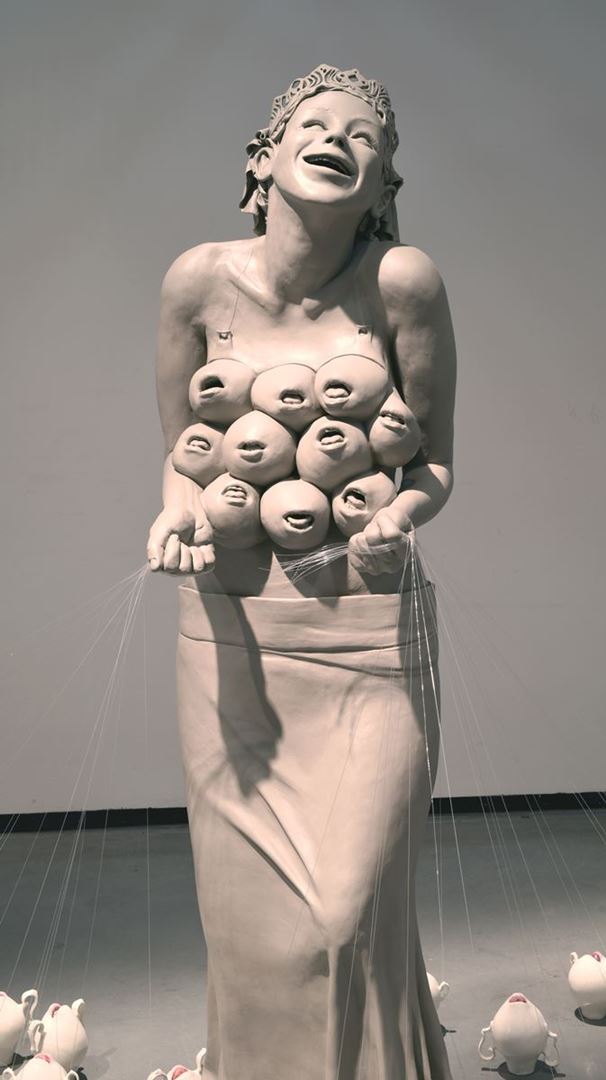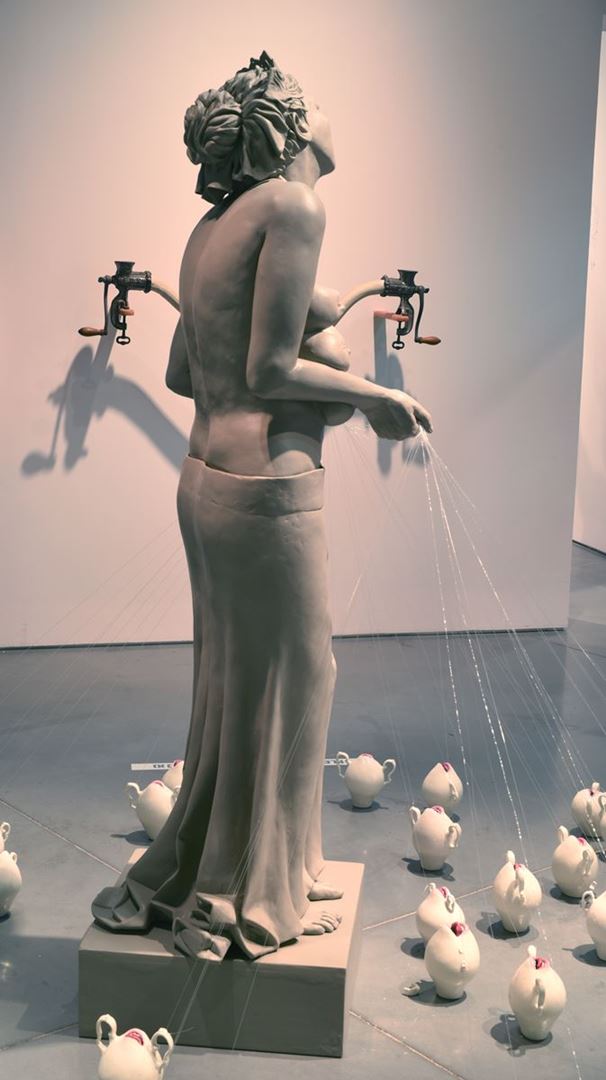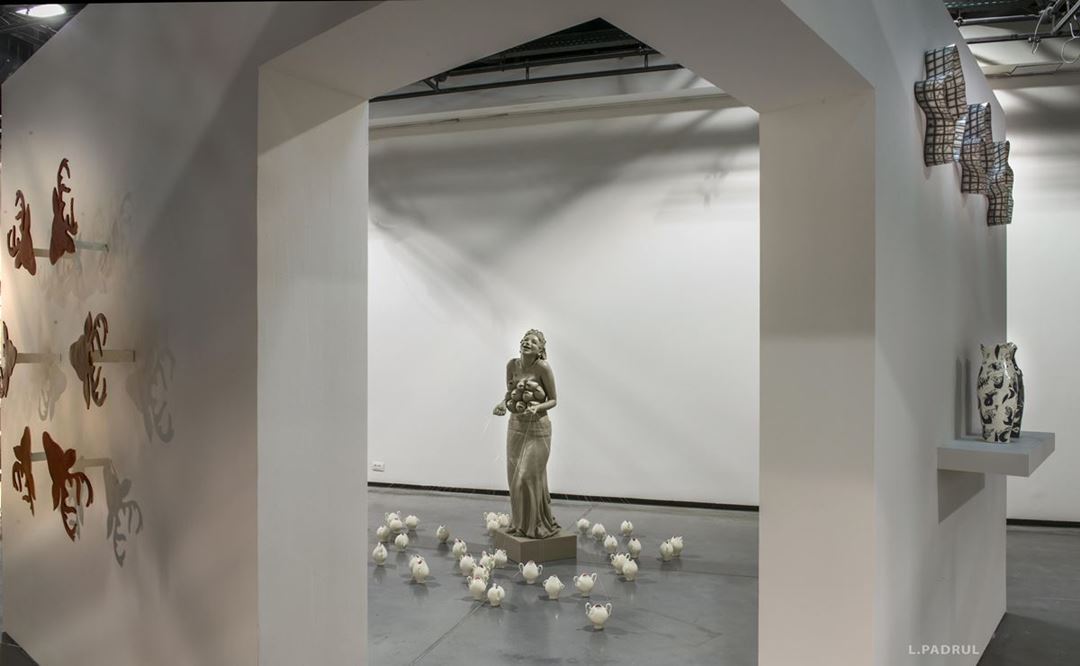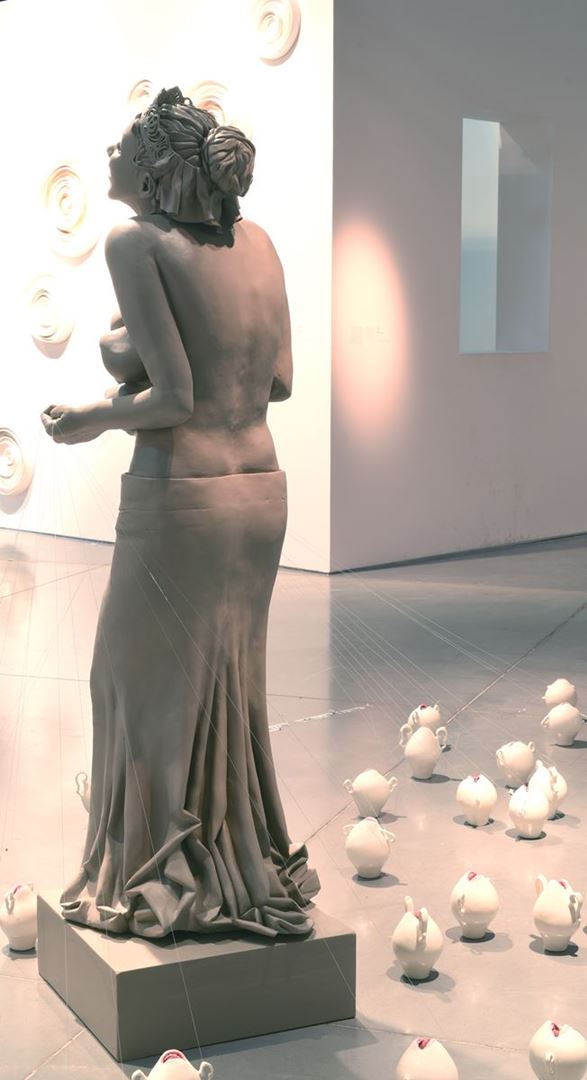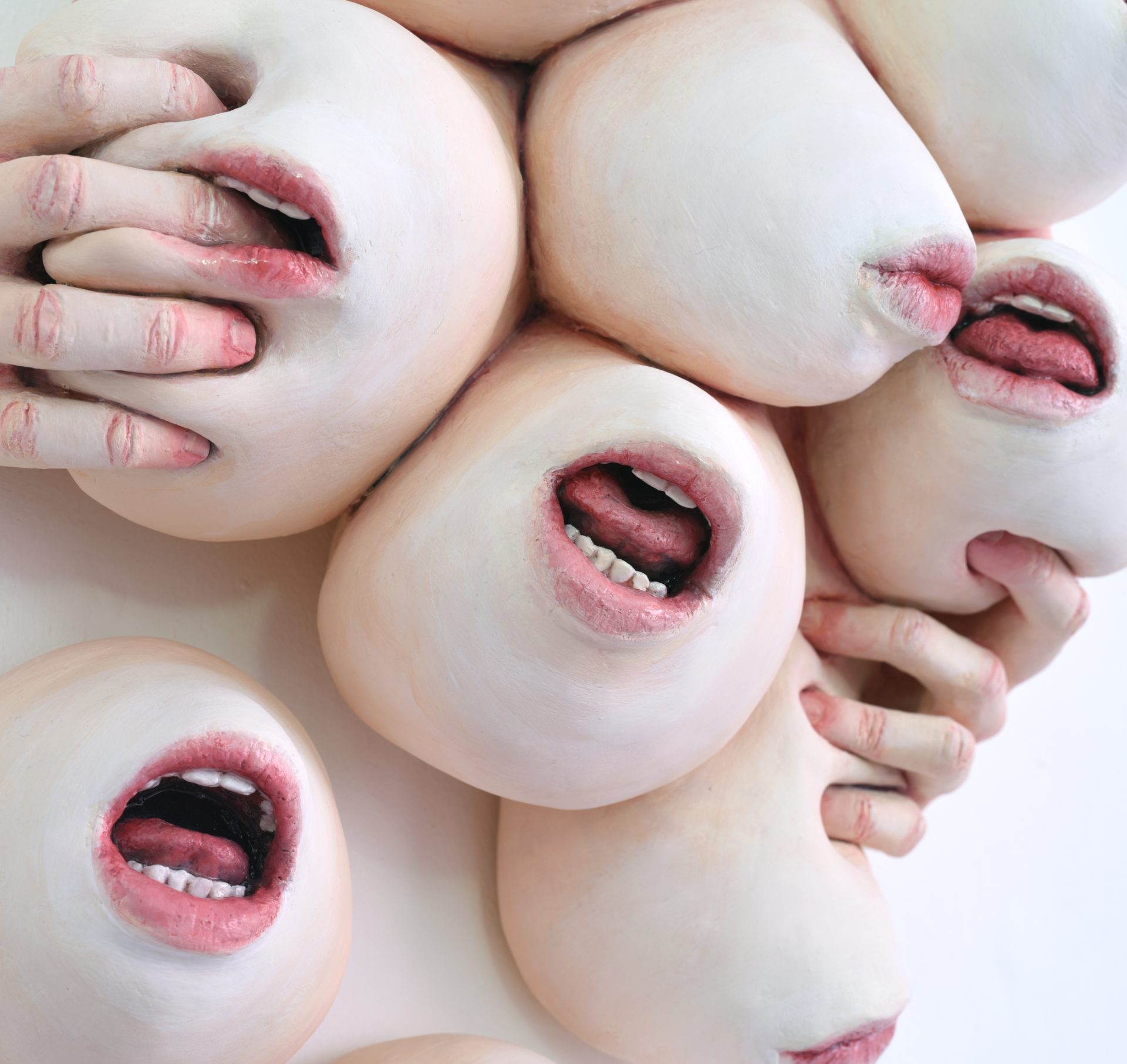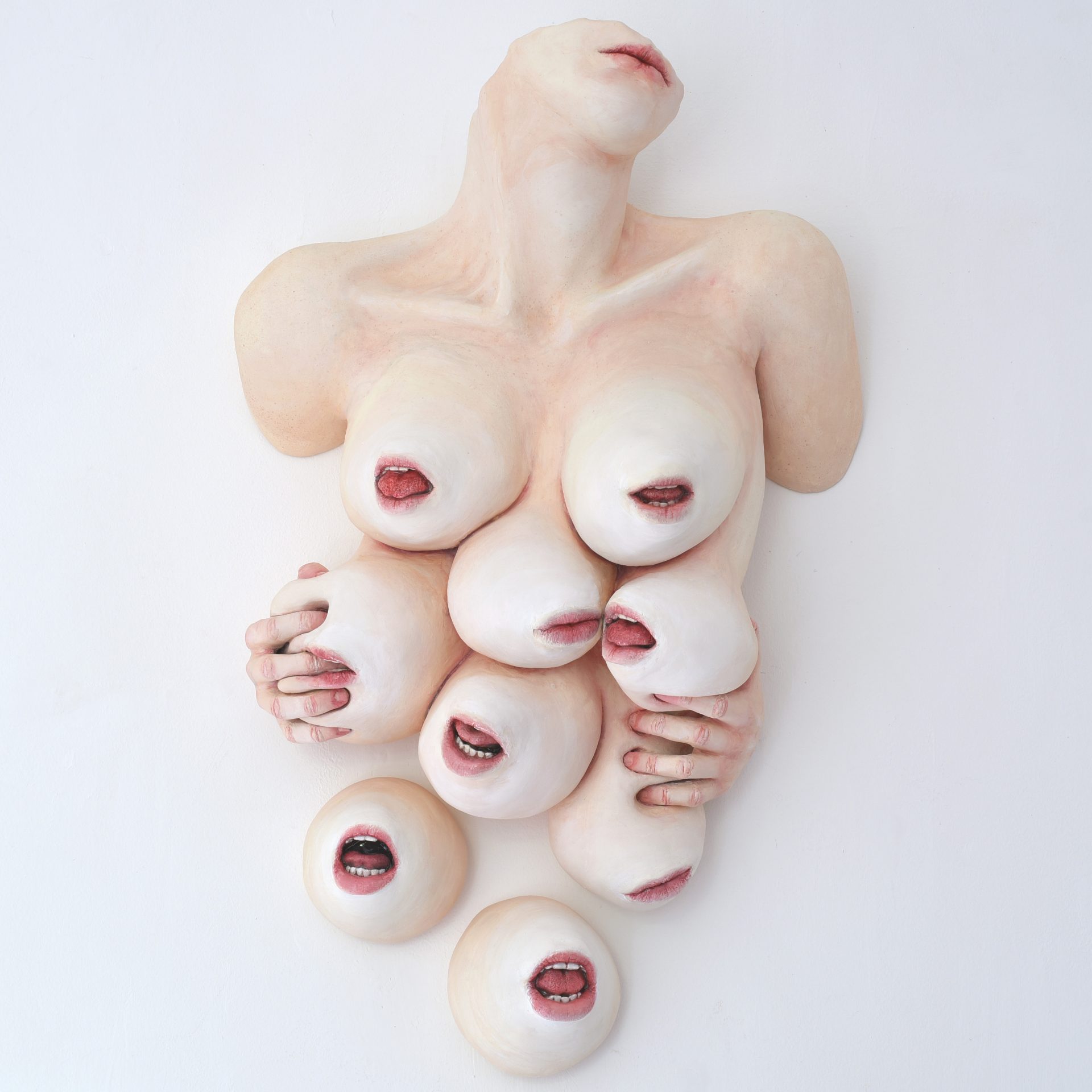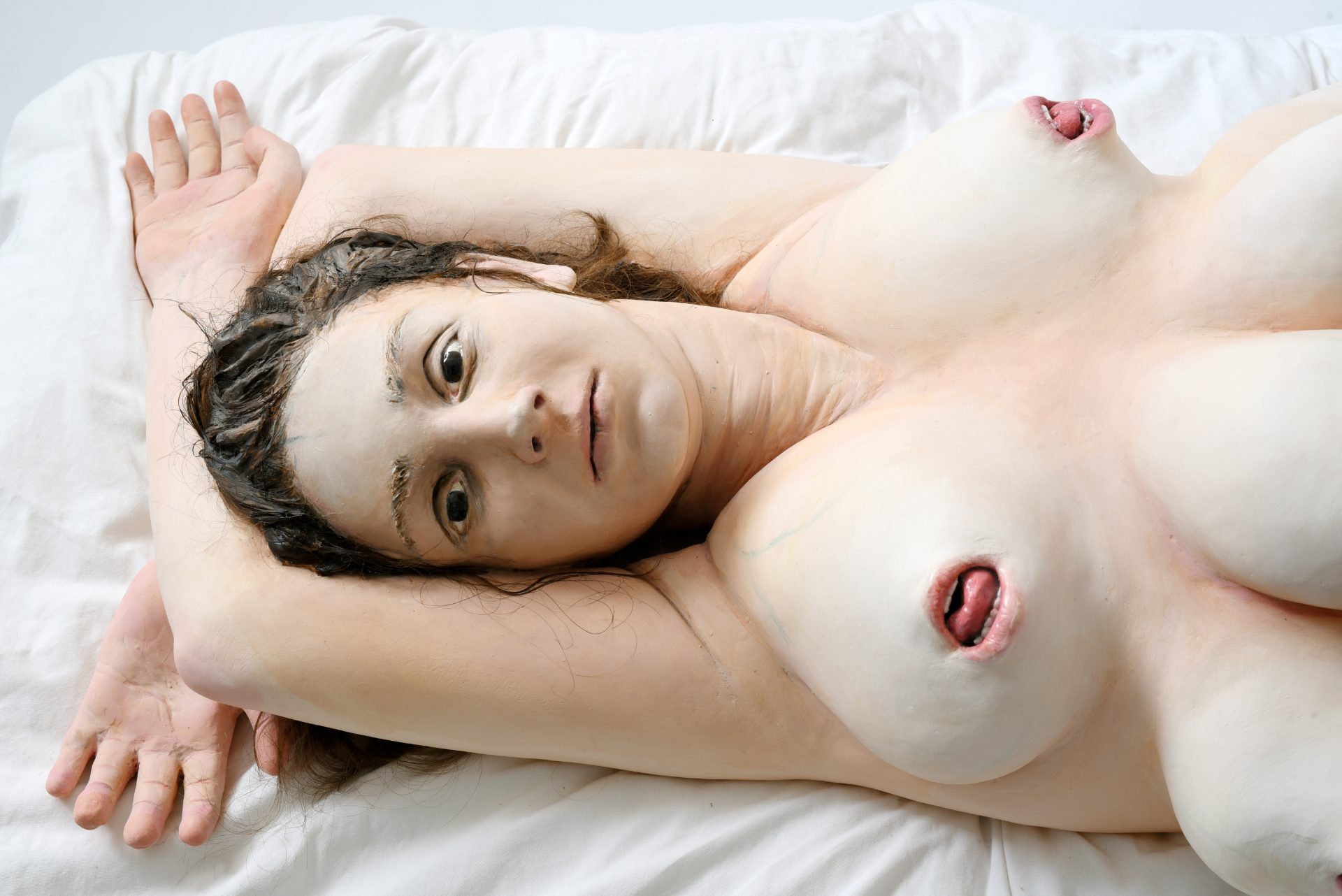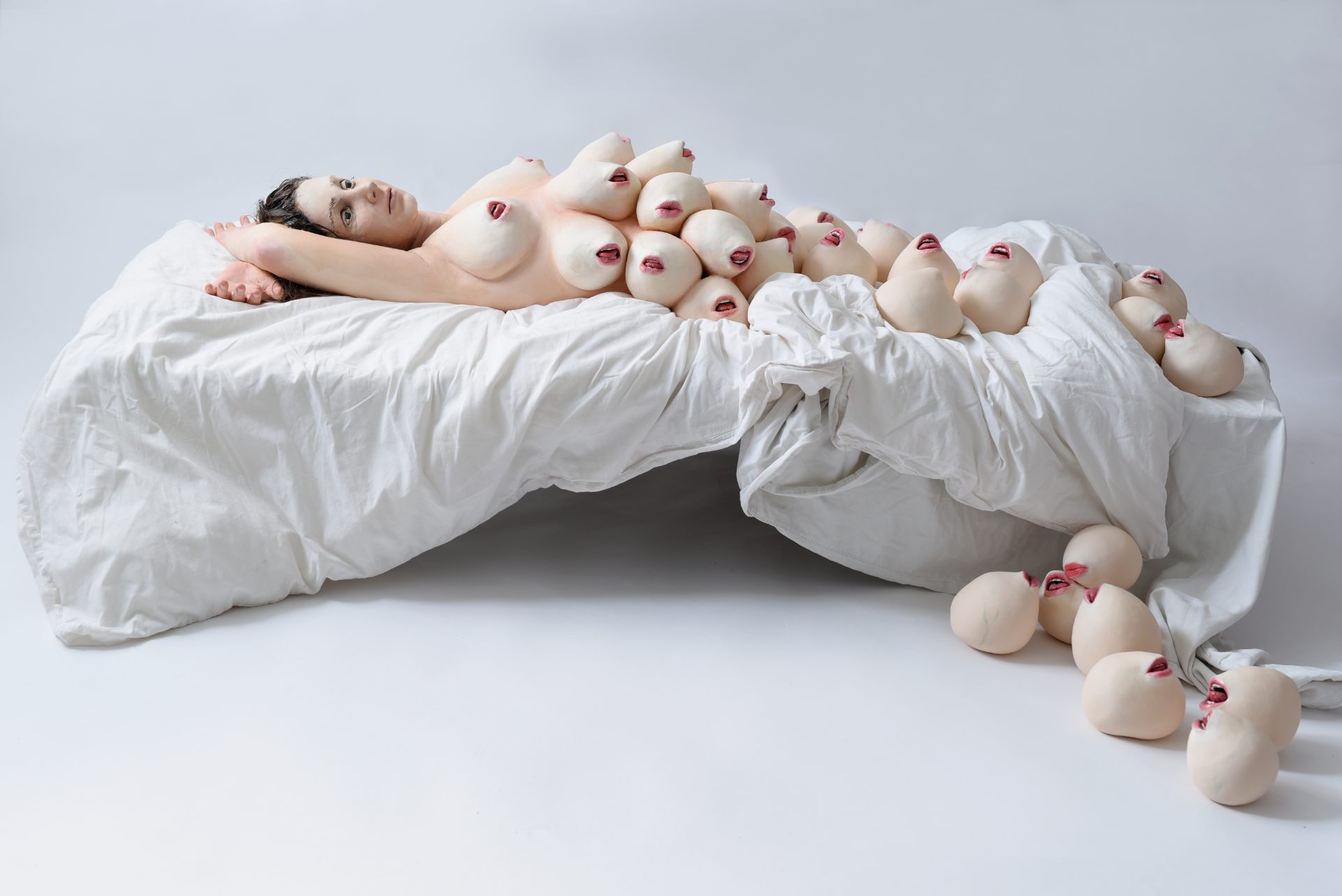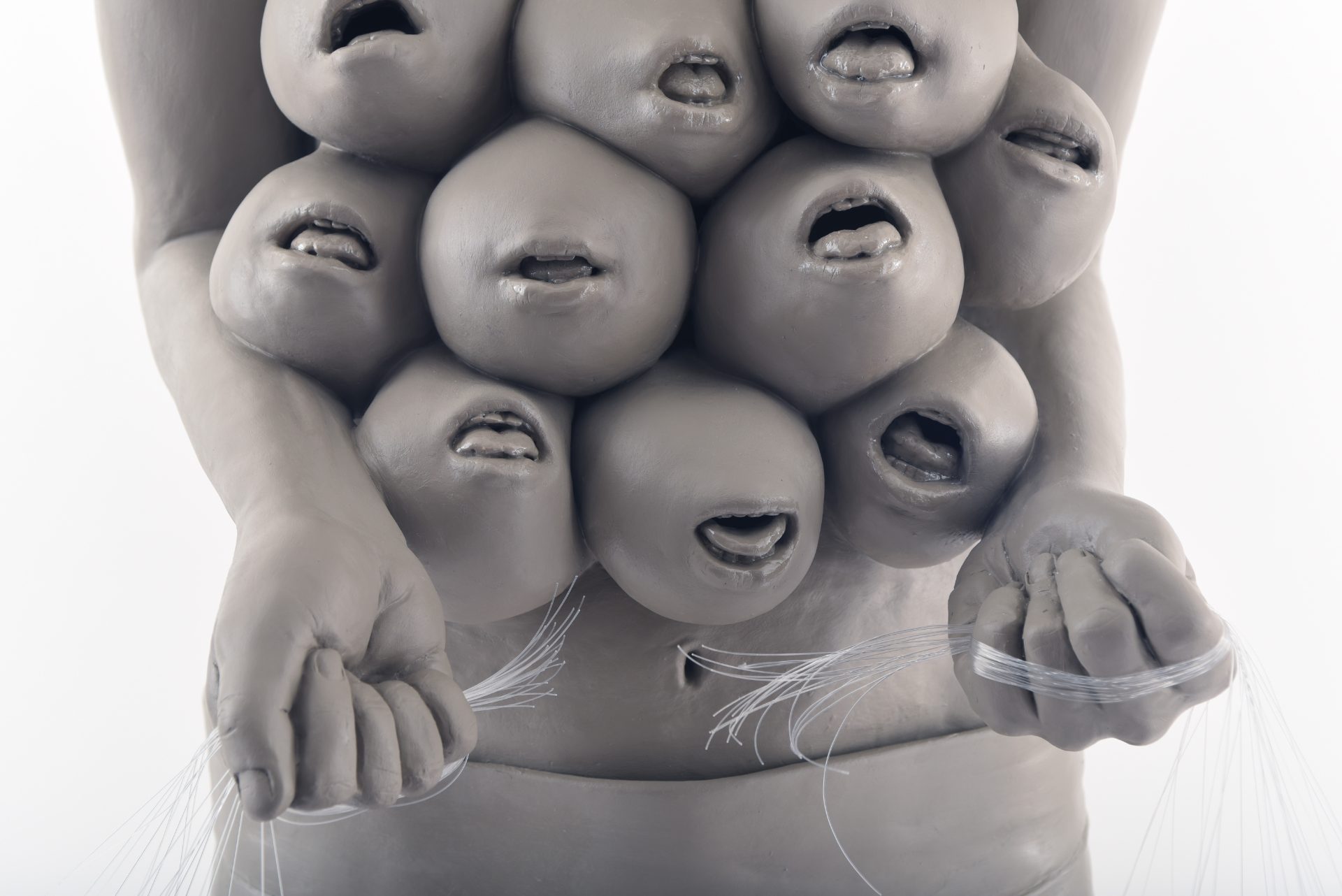
Exhibited in the Israeli Biennale of Ceramics at the Eretz Israel Museum, Tel Aviv, 2016. A standing figure of the Goddess Artemis.
The figure is painted as if it is made of wet clay. The viewer feels that by touching the figure a mark can be made on it, it can be changed. But no — she is just pretending to be made of wet clay.
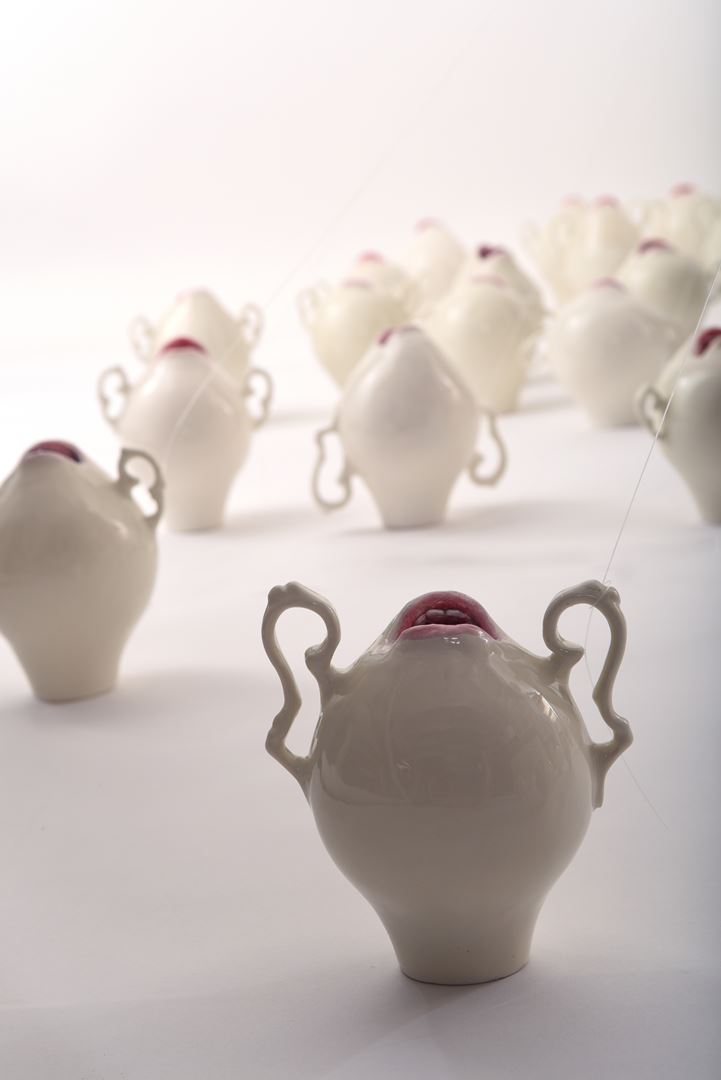
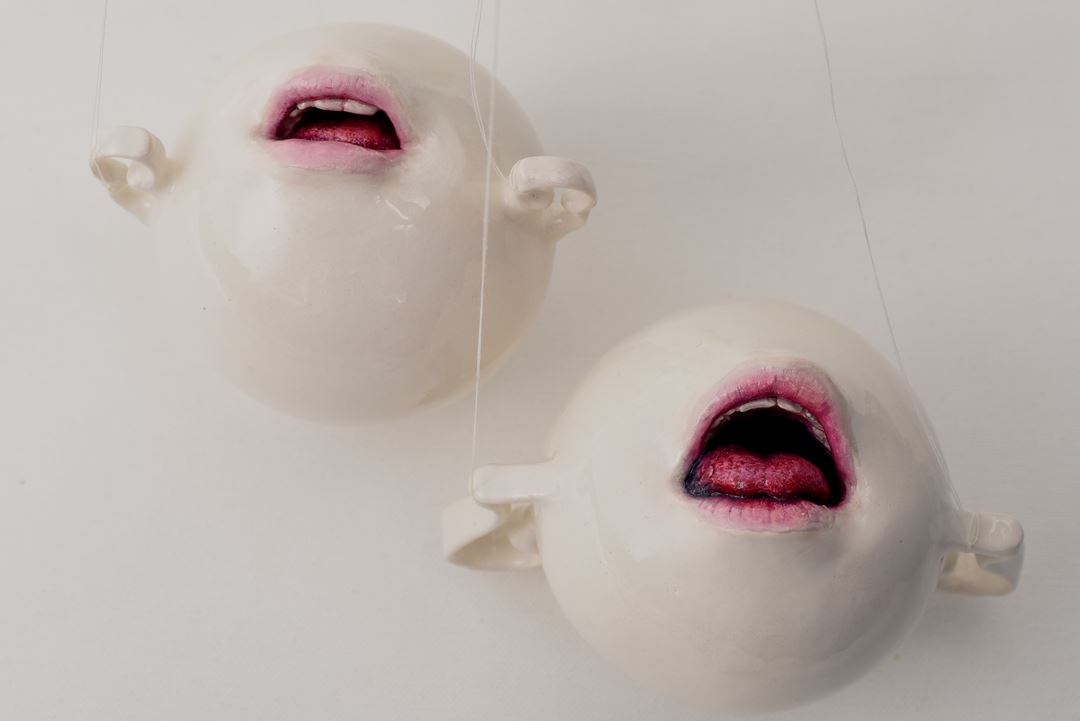
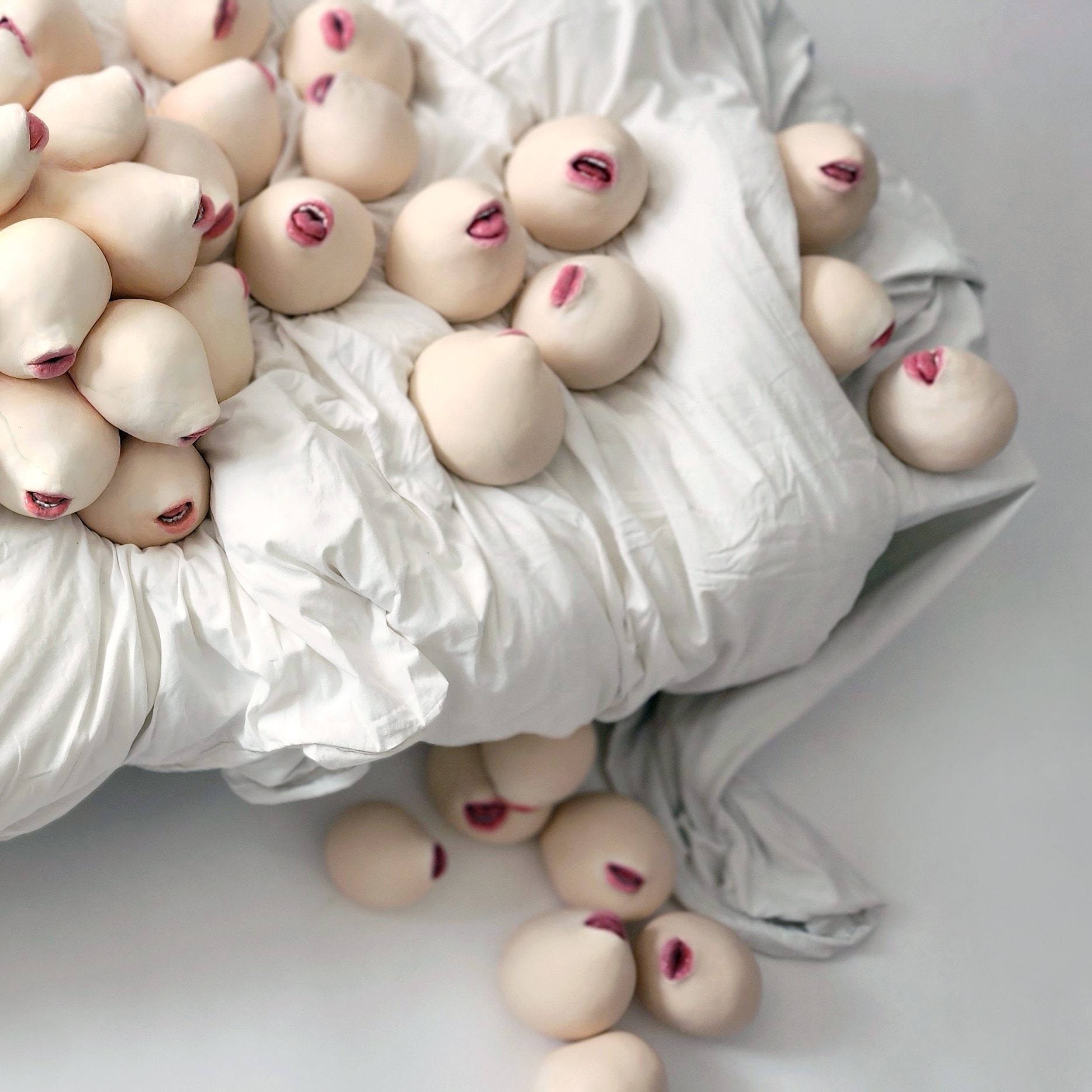
The Goddess is 160 cm tall. Her hands tightly hold strings attached to dozens of small glazed vases, resembling her chest piece, placed within a 170 cm radius around her.
My Artemis stands, inspired by the traditional pose of the ancient sculptures, but as opposed to them, she stands freely, bursting with ecstatic joy.
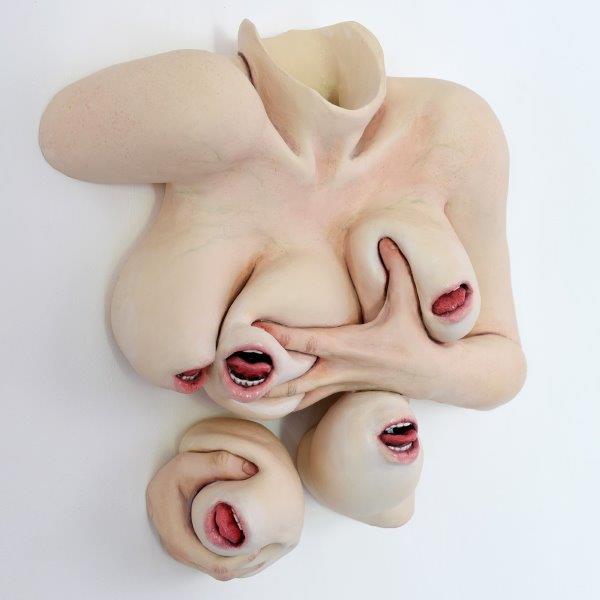
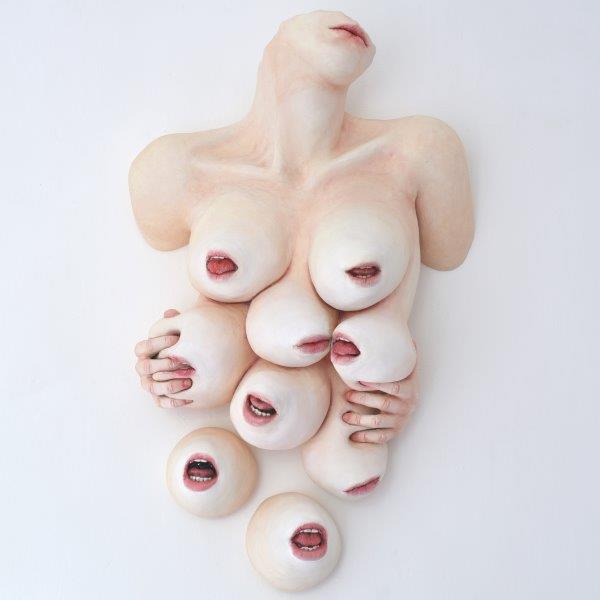
While researching the history of Artemis, I learned that in different eras she was perceived as a completely different character. From one end, Artemis is considered a goddess from the matriarchal period: the feeding, powerful Mother God. From the other end, later in time, she was changed and became a hunting goddess, a virgin, protecting her virginity ruthlessly. These extreme interpretations echo the research regarding Artemis’s chest piece. One explanation suggests a multi-breast, representing abundance and maternal feeding. An alternative explanation suggests that the round objects are not breasts at all, but a necklace made of bull testicles.
In My Artemis I decided to leave the chest piece vague, open for interpretation by the viewer. I see her as connected to both concepts: she is a Goddess Mother, castrating and never letting go. Regardless, it is certain that her breasts are no longer feeding; they are the ones that eat.